Category: archived

  • I never knew the difference between snow and freezing rain before today. When I took my dog out in the morning, it was neither snowing nor raining but maybe a hybrid. Instead of usual layers of opaque white dusts from snow, the ground was covered with a sheet of transparent ice.

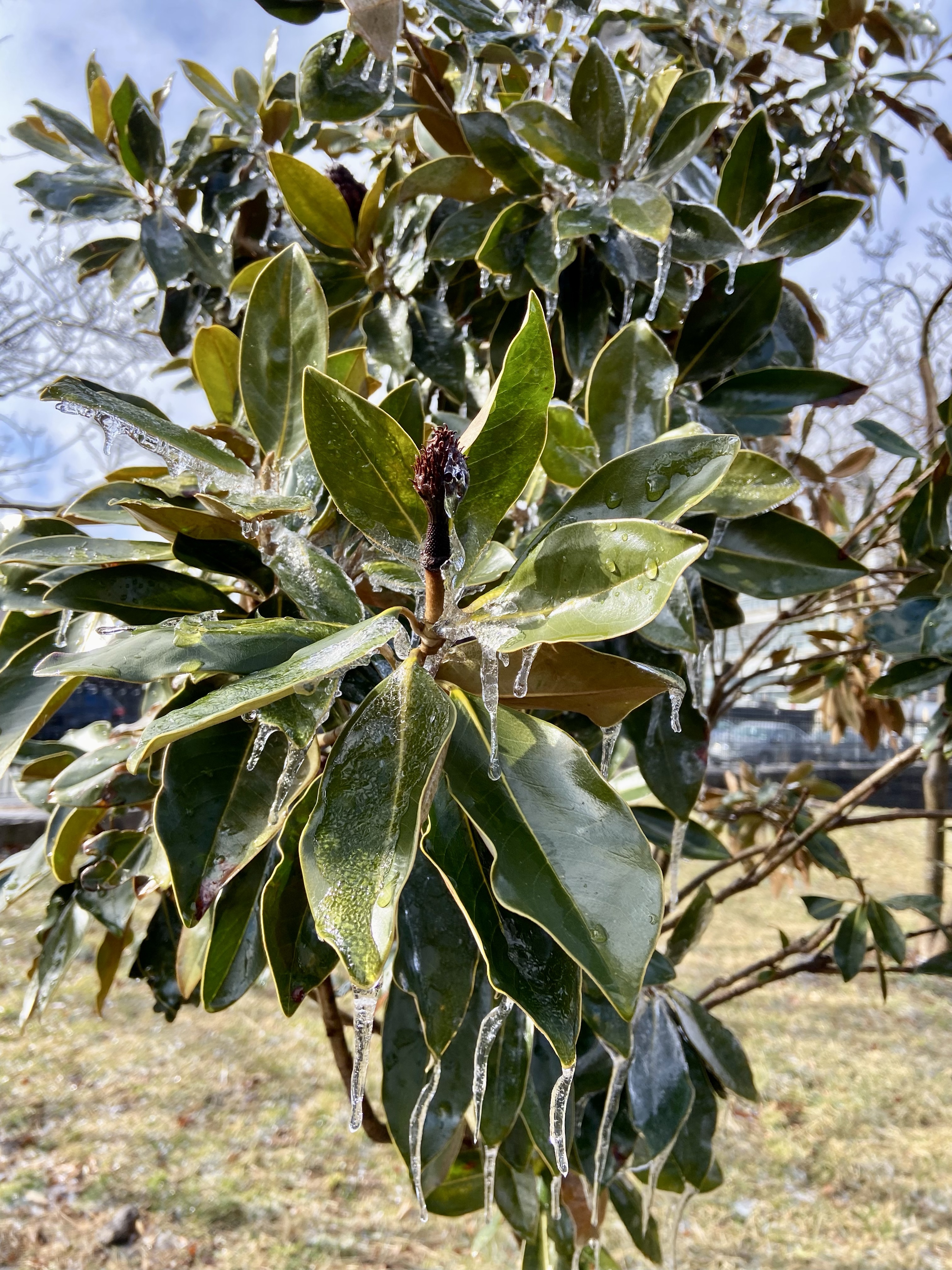
    Later in the afternoon, I took a walk around my neighborhood. It was finally sunny. As I walked, water droplets fell over me. I realized that water wasn’t rain falling from the sky but from trees that were frozen. I took a closer look at the branches. They were wrapped around with ice, as if they were glazed with glass. The icicles hanging from branches and leaves were gradually melting and shedding water.

    A strong wind swept through the park, causing the branches to shake off water all at once. As I watched this sudden downpour along the trees, I could visualize a conductor swiftly waving a baton as the orchestra picks up the tempo and crescendos in a dramatic symphonic piece—bowing fast on strings and cymbals hitting. At the same time, the sunlight glimmering on glossy icicles hanging from the branches made me feel at peace. This scene in the park was a testament to Vivaldi’s Winter—thejuxtaposition between intense first movement and the serene second movement.

    Out of curiosity, I Googled freezing rain. After going through a warm layer of air and melting completely, snowflakes go through a layer of freezing air but don’t have enough time to refreeze before hitting the ground. The water then refreezes on contact with any object that’s at the freezing point or below. The ice-coated tree branches I saw earlier were once snowflakes that turned into liquid then crystallized.

    In the midst of tumultuous events revolved around Russia’s invasion in Ukraine and going through a rejection in my personal life, I needed this moment to reflect and appreciate the natural beauty around me. Living in a dirty metropolitan city, I have to be intentional about finding green space and reconnecting with nature. In spite of conflicts and pains, life carries on like water falls down, from snowflakes to icicles melting and dripping droplets. It’s pure and precious.

  • This month marks one year since the World Health Organization declared the global spread of COVID-19 as a pandemic.

    On March 1, 2020, the first case of confirmed COVID was identified in NYC. Companies prepared for the looming storm and began allowing employees to work from home indefinitely. No one expected this to go on for this long, yet we survived through a year of isolation and virtual meetings. While we are finally seeing light at the end of the tunnel due to rigorous vaccination efforts, it’s hard to imagine jumping back into the old normal. The COVID world we have come to accept and live in now seems incontrovertible.

    The NYC mayor and big tech companies are currently planning to reopen their offices by late spring. Employees are dreading and hesitant about resuming their commutes and working in the office for 8 hours and 5 days a week. I, for one, do not look forward to pondering what to bring for lunch the next day. COVID has turned the world around for better or worse.

    I remember the morning of Monday after the news about the city’s first COVID case broke out. I headed to work. The subway was less packed than usual—some companies had already closed their offices, hence sparing noticeable space in the train. I could feel the uneasiness in the air, as if the passengers foresaw the calamity of the mysterious virus. A construction worker wearing a hard hat kept his eyes closed not because he was sleeping but rather in a meditative state. I exchanged looks with a lady standing across from me. We acknowledged each other with no words but our eyes only. We spread our feet wide and held onto the handholds to prevent falling on the moving train.

    This time last year my colleagues at work had been preparing since December for the arrival of first cases in New York. They were talking about contact tracing and started pulling people in to help out with the upcoming public health emergency. Masks and gloves were reserved and prioritized for health-care workers at that time. The administrator in my office went around to put together the list of personal emails and phone numbers—for the worst case scenario. She said we as city employees were never allowed to work from home, even during 9/11. I thought to myself, “This must be really bad.” I was used to emergency preparedness by the means of fire and tornado drills at school, but the COVID outbreak might be my first time seeing the worst case scenario being manifested in real life. Unfortunately, the difference between natural disasters and COVID is that the fires and tornados come and go, while the pandemic is here to stay—and we were far better prepared for fires and tornados than for the virus.

    The year under lockdown has transformed businesses, cultures, relationships, and our definitions of home and workplace (or the blurred line between the two). We have been cooking more at home and making sourdough bread from scratch. While some restaurants have leveraged by offering takeout and outdoor dining options, other business owners had to close their stores for good. I recently let go of my favorite Vietnamese place in Upper West after months of closure and no signs of reopening. I am still sad about it because they made the best lemongrass pork banh mi sandwiches. The New Yorker featured an article that examined the NYC restauranteurs trying to keep their businesses open and following the constantly changing COVID guidance during this past long and brutal winter (https://www.newyorker.com/magazine/2021/03/01/how-restaurants-survive-the-long-pandemic-winter).

    COVID had an impact on our relationships. Due to social distancing, we were forced to be creative with socializing and staying connected. In terms of dating, COVID has been both a curse and a blessing. While opportunities to meet physically are sparse, people seem more upfront about having conversations about expectations (what they are looking for) and boundaries (what precautions they are willing be flexible with) right away. Couples in quarantine have been spending more time together than ever. Psychotherapist Esther Perel says it’s been a 50-50 split between breakup or more closeness among the couples in her practice during COVID.

    Whether it be baking, learning to play a new song on the guitar, responding to the COVID outbreak in the city, or having a picnic with friends at the park, I have made it thus far in good health. That’s all that matters. I have been privileged to stay employed despite layoff threats last summer due to the city’s fiscal deficit. As we enter a new year of COVID, I am preparing myself optimistically yet cautiously for my return to the familiar yet strange world post-pandemic.

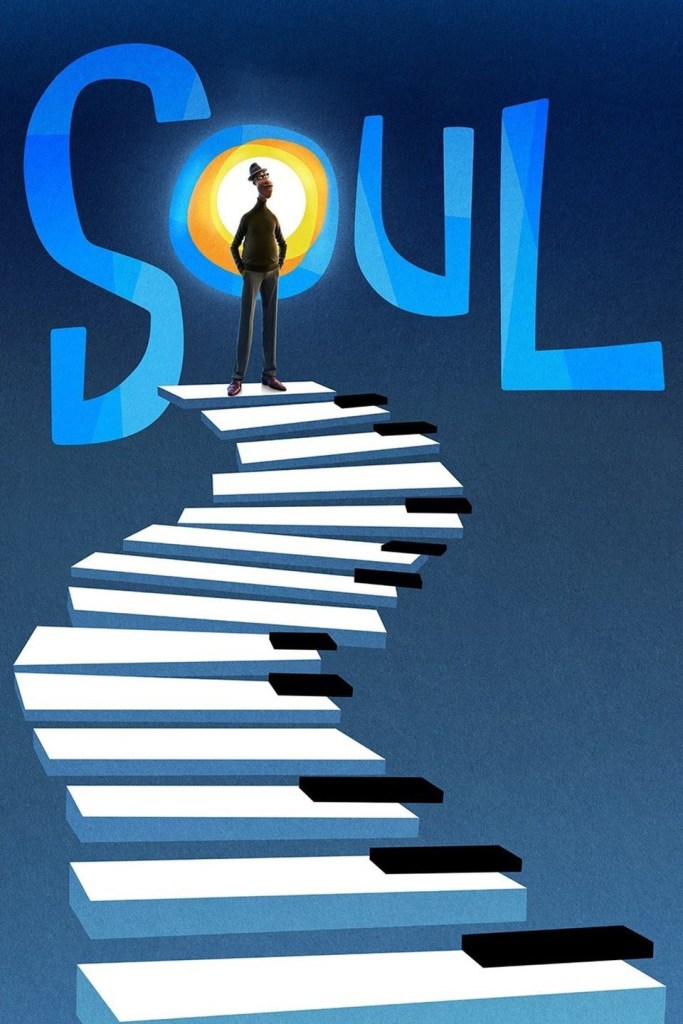
  • I put aside this post as a draft for longer than I would like to admit. I started blogging with a goal of publishing at least one post per month, but alas, three months have passed since I’ve published anything here. Today is the last day of a new year. This month we welcomed a new Administration and reached a new milestone in public health–two highly effective COVID-19 vaccines have rolled out and been distributed beyond health-care workers. Due to a second wave of COVID in NYC, I have been swamped with work that has demanded a lot of overtime, giving me a little to no headspace and leisure to write at all in the past couple of months. Despite the hectic schedule, I squeezed in some film viewing. My family and I streamed Soul on Disney+ the day after it premiered on Christmas. I enjoyed it and have been working on this critique bit by bit since.

    This was the only movie I looked forward to all year long. With the theaters being temporarily closed, I’ve found it harder to stay up-to-date with movies because I usually rely on trailers in the theater for what to expect and look out for. Going to the movies was one of my regular diversions pre-COVID, and I can’t wait to get back to it once the epidemic is lifted. Until then, street posters and previews on streaming services will do.

    While the movie has received a generally positive reception, it garnered unfavorable reviews concerned with its racist implications. Some audiences who were hopeful about the movie featuring a Black man as the protagonist have expressed disappointment in the human character’s transformation into a quasi-dead soul, failing to amplify the authentic voice of a minority group (https://www.tor.com/2020/07/14/representation-without-transformation-can-hollywood-stop-changing-cartoon-characters-of-color/). The dissenters have a point. More movies with people of color as leading roles that do not turn into amorphous or zoomorphic characters cannot wait. However, Pixar delivered yet again–real, relatable characters, accurate depictions of the setting, and ontological dialogues and themes that deserve more credit and praise than criticism.

    *Disclaimer- spoilers beyond this point*

    The movie is about a high school band teacher named Joe Gardner who loves to perform Jazz piano in Harlem of New York City. In the beginning we find him jaded after many failed auditions and barely holding his class band together. One day he meets a famous saxophonist named Dorothea Williams and dazzles her with his piano playing. Dorothea gives Joe a chance to perform with her quartet band at the Half Note Club. Joe is overjoyed and determined not to throw away his shot at redeeming his performance career. While he ecstatically calls up his friends about the good news, Joe falls into a manhole and wakes up as a soul en route to the Great Beyond—the afterlife or post-existence place of life, whichever you want to take.

    He is not quite dead yet. His body is in a coma in the hospital, while his soul is pending for a subsequent life of uncertainty. Death right before getting closer to achieving one’s dream—sheer misfortune or fate? Joe refuses to leave his life behind on Earth and desperately tries to return home to make it to the gig. He accidentally lands on the Great Before where unborn souls are preparing for their lives as humans with mentors who already completed their time on Earth. Here enter Soul 22, a precocious and nihilistic being who have spent thousands of years figuring out their “spark,” the last badge along with inherent personality traits needed to debut their life as a human. Soul 22 have had many mentors including notable historical figures such as Mother Teresa, Carl Jung, Abraham Lincoln, and Marie Antoinette, but none of them succeeded in helping Soul 22 graduate from the Great Before. Joe decides to mentor Soul 22 in exchange for returning home and reuniting with his body.

    Joe and Soul 22 descend from the Great Before and land in New York City. Joe wakes up to realize that his soul entered a therapy cat in the hospital while Soul 22 ended up in his body. The real Joe, now a cat, and Soul 22, who begrudgingly pretends as Joe, go on an adventure in the city. At first, Soul 22 as Joe refuse to cooperate with the real Joe in reclaiming his original body and try to get away. Joe bribes 22 with a slice of New York pizza. Soul 22 is enlightened by such delectable experience. As 22 live the life of Joe and meet the people in his life, Soul 22 learn that life is made of strange and joyful experiences. 22 have spent numerous years trying out various activities in the Hall of Everything to determine their purpose. They eventually earn their last badge after a brief trial of living on Earth through Joe, but neither the audience or the characters know what exactly ignited their spark. When Joe asks the Great Before counselor Jerry what 22’s spark was, Jerry laughs and tells him that a soul does not have a specific purpose.

    The main takeaway of Soul is that life is more than careers or achievements–it’s about gaining experiences and taking pleasure in small, ordinary moments. Joe thought music was his spark his entire life and that his gig with Dorothea Williams would advance his course as a musician, but after the performance, he doesn’t feel as elated or gratified as he anticipated. Dorothea then tells him a story about a fish in the ocean:

    “[A fish] swims up to an older fish and says: ‘I’m trying to find this thing they call the ocean.’ ‘The ocean?’ the older fish says, ‘that’s what you’re in right now.’ ‘This’, says the young fish, ‘this is water. What I want is the ocean!’”

    Like the young fish, Joe has constantly strived for something bigger and better, but after a near-death experience, mentoring a lost soul and being trapped in a cat’s body, Joe learns to appreciate and celebrate the moment and small wins. I was also guilty of being shortsighted as the young fish when I just left the Centers for Disease Control and Prevention. I was certain that I would find a full-time job in clinical research right away, but it took me seven months of working part-time at a retail chain coffeeshop and a total of one year of applying and doing interviews until I secured my current position at a local health department. I thought I had all the variables, a Master’s degree from a reputable program and prior research experiences, needed to be employed. Even after an interview I thought went well and felt good about, the company never got back to me. With hindsight, I am grateful for that season in my life when I was serving and working with people through coffee. More about that later in a future post.

    I think most of us are like Joe in a sense that we don’t appreciate the value of our lives until a near-death experience first-hand or indirectly through a loved one. I had this existential moment when a car almost hit me as I was crossing the road during an afternoon run two years ago. It was my right of way, but the car kept going despite the light that had just turned red. The impenitent driver honked at me. I made it to the other side safely in one piece but froze for a few seconds. It felt as if everything around me paused. I thought of my friend’s friend who had just passed away from the Sri Lanka bombings earlier that month. I thought to myself, “Wow, that was close. If the car hit me, I would have been in a critical condition or died.” I was relieved and grateful for my life.

    If you were to die today and replay the life you’ve had as you prepare for the Great Beyond, what images would you see? Were you good? Were you kind? Were you strong? What did you do? To the very end, did you try to enjoy the moment to the fullest? As poet Mary Oliver put it, “Tell me, what is it you plan to do/ with your one wild and precious life?”

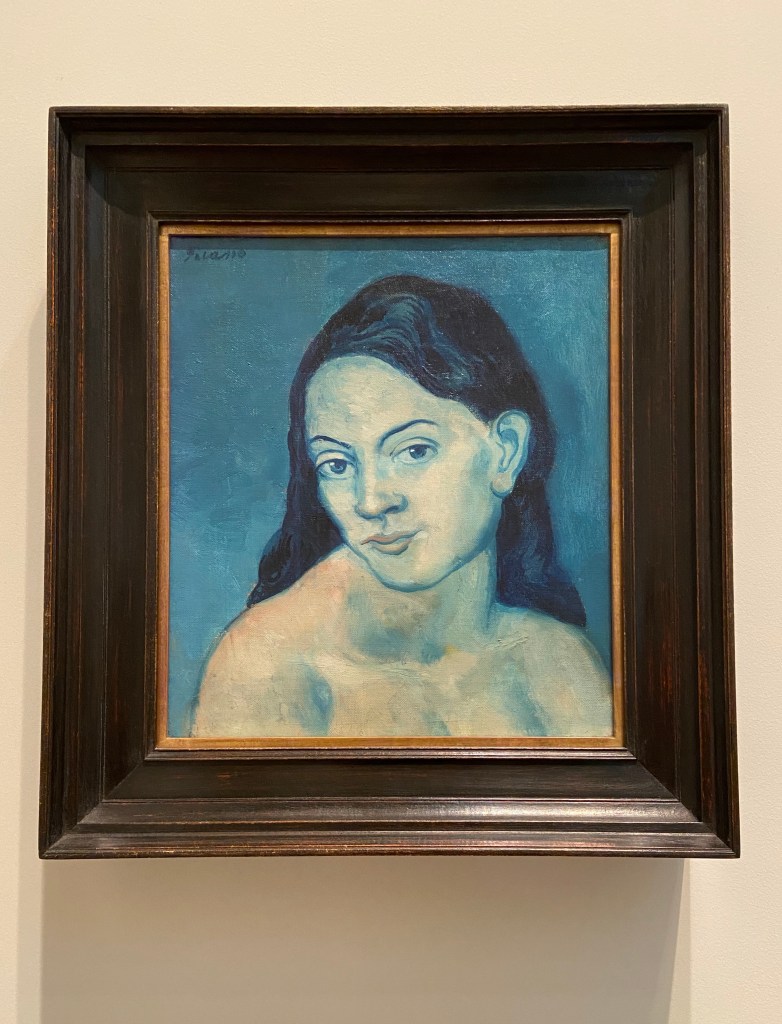
  • Picasso, Pablo. Head of a Woman. 1903, Metropolitan Museum of Art, New York.

    October was packed with milestones and relishing moments that made the New Normal more bearable. First, I celebrated my 29th birthday. I reconnected with my high school in two ways- I caught up with two of my classmates who also found their ways to New York and gave a presentation on COVID as a guest speaker to my old math teacher’s algebra class. Last but not least, I (early) voted!

    Shortly before my birthday, my sister and I took a trip to the Met. This was our first museum visit since lockdown. We had just finished a mandatory quarantine of 14 days after returning from our home state Georgia, one of the restricted states flagged by Governor Cuomo as high COVID transmission areas. I reserved a time slot a week in advance and solely looked forward to this outing to get through the quarantine.

    The Met is always a delight. The sheer grandeur of it forces me to reflect and get lost physically and mentally. It’s humanly impossible to cover everything in one day, but being a NYC resident, I could come back and explore the rest at my own pace – the Met is an ongoing personal project for most New Yorkers. This time we checked out the Lattice Detour by Hector Zamora on the Roof Garden and the Jacob Lawrence exhibition. They were both riveting and praiseworthy, but I prefer stumbling upon classics or more traditional pieces such as this painting by Picasso. I mean traditional loosely here. It would be sacriligious to gloss over centuries of art evolution by grouping Velazquez and Picasso into one arbitrary “traditional” category.

    Having studied a bit of art history of Spain in high school and college Spanish classes, I struck a chord with this piece from Picasso’s Blue Period. It’s not one of his well-known works but looked familiar to me. I could immediately recognize it by the blue monochrome that resonates with somber, melancholia and depression. All makes sense because Picasso painted such to mourn his friend’s death in his 20’s. Behind the telling colors, I found nuances that juxtapose the blue sentiments. It is a portrait of a poised woman with her head tilted slightly, revealing her left jawline and ear. She is staring at the viewer with suggestive curiosity as if she is about to ask you a question. The orange tone of her skin brings about warmth to counteract the prevailing blue, especially her long navy hair that seems to continue below her shoulders. What I saw in the painting was resilience- the woman keeps her composure in a gloomy ambiance. This subtle contrast makes the artwork powerful.

    What do you associate with the color blue? Are you feeling blue? With the COVID epidemic still in progress and the Election Day merely five days away, people around me have expressed that they’ve been anxious, irritable and nihilistic. Are you blue politically? With our country being deeply polarized, it is hard to avoid taking sides or identifying yourself with one particular political group. The current presidential candidates are fighting to turn the Swing States into Blue or Red to win the election. I wonder why the government has to be this black-and-white. What about the gray area or the color purple? We’ve come to the point where we are unable to unite over the issues that should transcend the ideological differences, such as public health that is more crucial than ever during a pandemic. The divisiveness is accentuating my blues today.

  • Never forget.

    Today marks the 19th anniversary of the September 11th, 2001 attacks. To echo the Reddit post, I grieve more deeply with the city where the event took place and the nation on this 9/11 anniversary.

    During the weekly COVID response unit meeting this morning, a colleague commemorated 9/11- she remembers it as one of the hardest times in her career. She did not narrate much about her specific public health response at the time, but I imagine the 9/11 response by the city health department being similar to the current COVID efforts. This is certain: from both crises, we have lost our loved ones and too many.

    I was not living in New York City or even in the U.S. on 9/11/01. My visual memory of it is still clear. I watched the attacks on television- an airplane crashing into Twin Towers, the world’s tallest buildings then, and subsequently, explosions of fire and smokes rising. I was in fourth grade. I asked why anyone would do such evil. I was saddened by the pain that the New Yorkers and other Americans were enduring. Later in college, my friends would recount their reactions and experiences from that day. They were dismissed from school early and mourned the tragedy with their families.

    Seeing and listening to the news is one thing, but directly witnessing and living through 9/11 in NYC must have been surreal. Even after almost 20 years, the city has not stopped grieving. From what I’ve been gathering from my colleagues in the Department of Health, it was a time when the city showed its true resilience and tenacity. First responders, fire fighters, paramedics, police officers and providers all came together in full force to rescue and heal the victims and their families. It’s remarkable how they were able to restore the World Trade Center and the entire city.

    Today the city is experiencing another collective trauma. In March 2020, a Novel Coronavirus (COVID-19) epidemic broke out, making NYC the COVID epicenter of the country for four months. Almost 20,000 New Yorkers died from COVID so far. Following lockdown and business closures, the city is grappling with economic repercussions of the epidemic. The infection rate and death toll may have decreased now, and the city may have reopened for the most part. However, COVID is still going around. With no treatment or vaccine for the disease, the city’s prospects are up in the air.

    I am sad to see the current state of the city- it’s quieter than what we are used to. The city was full of energy and vibrancy that attracted many dreamers including me. I have faith in New York, though. That’s why I never left like some cowards who abandoned their flats and fled the city.

  • I am an epidemiologist. I look at data and try to make sense of and apply them for a living. I moved to New York City a year ago. A pandemic broke out in March. I have been thinking and feeling all sorts of things as I was living and working in the city as the emerging COVID epicenter. Instagram and Twitter were too cumbersome for all of my thoughts, so I decided to create a blog. I wanted to have a safe space for me to process and write about my experiences during this strange time.